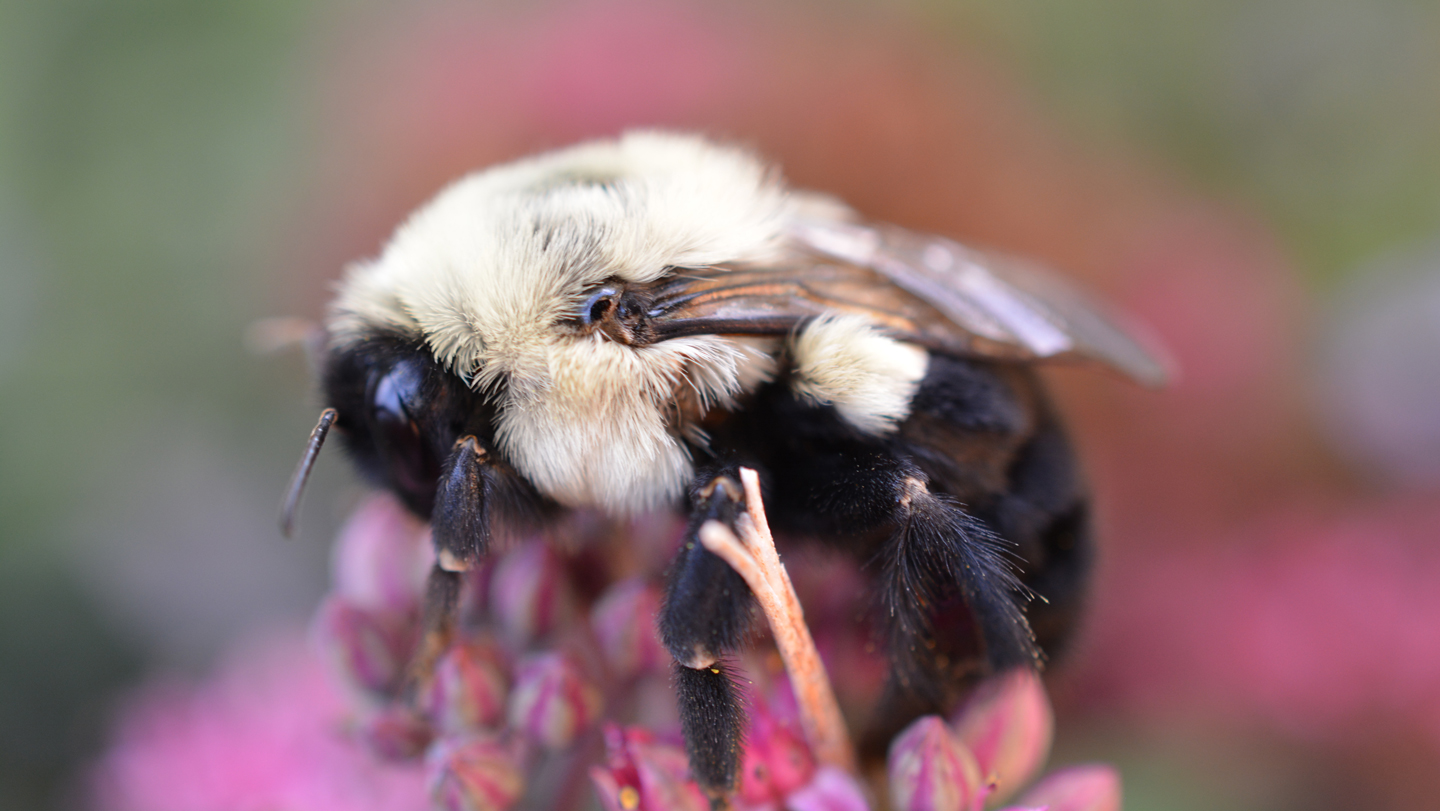
The bedraggled bumblebee queen seemed lifeless. Yet she was somehow alive — still breathing after being underwater for roughly a week in the lab.
Did she manage to hold her breath for all that time, wondered ecological physiologist Charles Darveau. “I did a simple calculation: How much oxygen would they need on board to be able to last that long?” Darveau says. One bumblebee queen roughly one milliliter in volume would need 20 milliliters of oxygen. “So, it was impossible.”
Instead, it turns out submerged queens can survive for days by breathing underwater, Darveau and colleagues at the University of Ottawa in Canada report March 10 in Proceedings of the Royal Society B: Biological Sciences. The queens’ metabolisms — already dampened to ease energy demands as they hibernate in an underground hole over the winter — also switch to anaerobic strategies that don’t rely on oxygen.
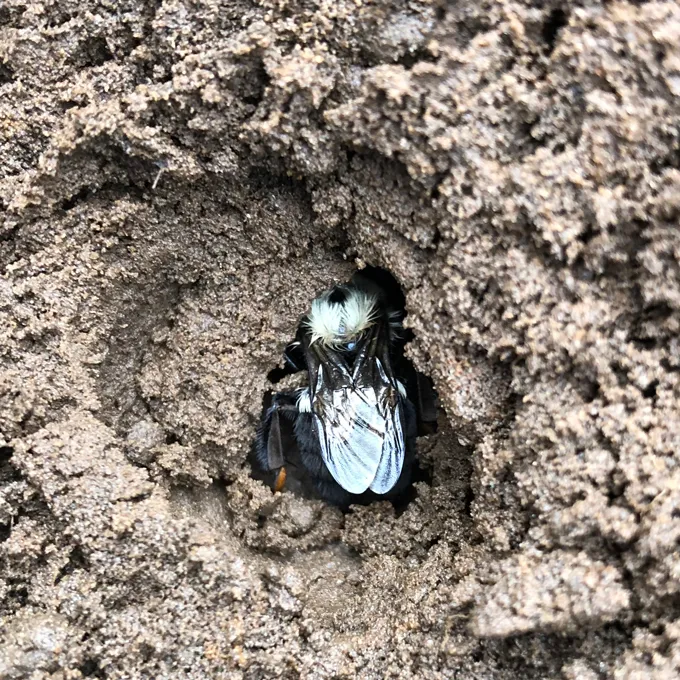
Biologist Sabrina Rondeau was part of the team that previously discovered hibernating eastern bumblebee queens (Bombus impatiens) won’t drown for up to a week after some vials holding queens flooded in a lab accident. Bumblebees hibernate in soils that could flood, but how the insects survived the lab accident was a mystery.
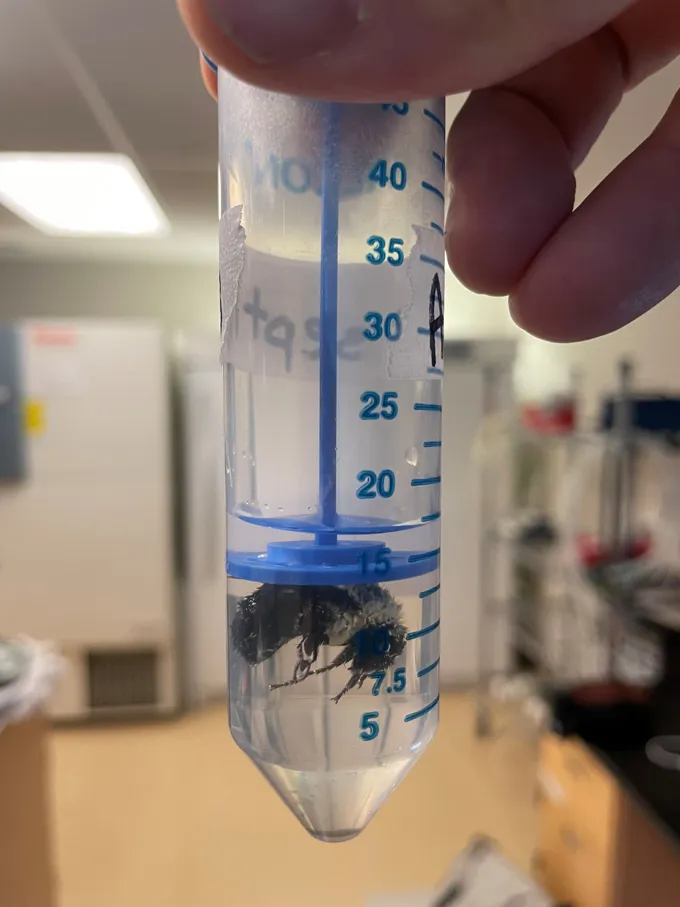
Researchers submerged hibernating bumblebee queens in plastic vials for eight days. They took measurements to see how much oxygen the bees inhaled and how much carbon dioxide they exhaled.
Charles DarveauSo Rondeau, Darveau and biologist Skyelar Rojas placed hibernating queens in vials that were filled with cold water for eight days. The team then measured how much oxygen the insects inhaled, how much carbon dioxide they exhaled and whether their bodies accumulated lactic acid, a sign of anaerobic metabolism.
Oxygen levels in the water dropped over time, the team found. The queens also continuously released carbon dioxide into the water, a sign they were still breathing.
What’s more, lactic acid levels spiked during submersion, showing that queens can also tap into other ways of producing energy. How bumblebee queens manage to breathe underwater remains unclear. But many aquatic insects trap a thin pocket of air around their bodies, and it’s possible bumblebees do the same.
Submerged queens can take some time to recover once they come up for air, Darveau says. For several days, they breathe at a higher rate than queens that don’t spend time underwater, to help their bodies clear out the lactic acid.
With rainfall becoming heavier with climate change, “we’re starting to think of how many bouts of these floodings can they withstand,” Darveau says. Bumblebee queens hibernate for months, and that takes fuel. If repeated submersions put a dent in the bees’ energy reserves, “there might be some point of no return.”
Source link
About the Author