When it comes to identifying fossil species, a lone leg bone isn’t much to go on. Yet a new analysis of a large fossil tibia suggests it offers a clue to the origins of Tyrannosaurus rex, the hulking, sharp-toothed apex predator that dominated the twilight of the Age of Dinosaurs.
The bone’s sheer size hints that it was a tyrannosaurid, a group that includes the most massive members of the tyrannosaur family tree, researchers claim in a study published March 12 in Scientific Reports. Tyrannosaurids lived late in the Cretaceous Period, between 83 million and 66 million years ago, and have been found only in Asia and North America. This tibia was found in rocks that date to about 74 million years old.
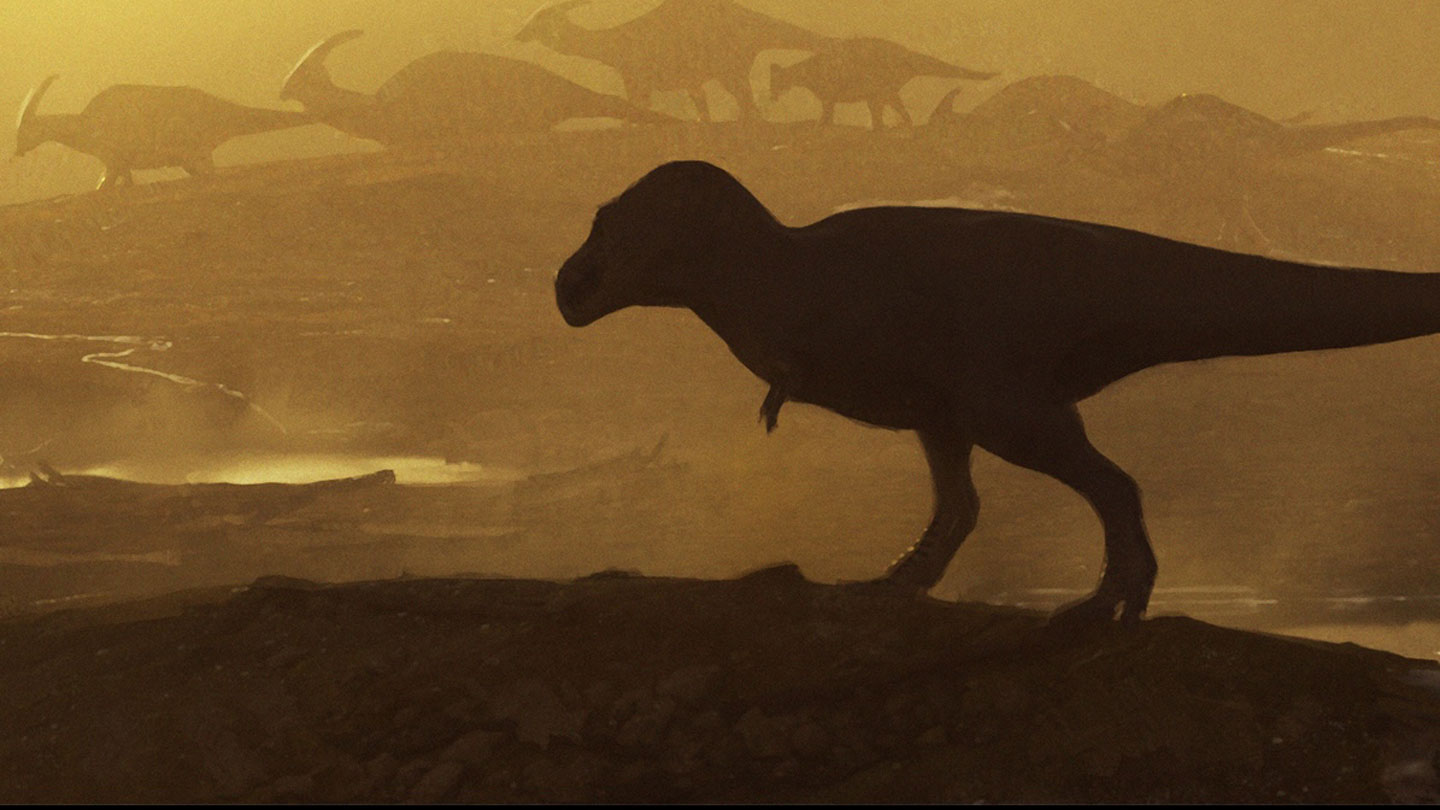
T. rex evolved in the final part of the Cretaceous, in what’s now northern North America, about 68 million to 66 million years ago, the youngest, biggest and most highly specialized predator of the group. Yet the origins of the iconic dino are murky. The most widely accepted hypothesis is that its large-bodied ancestors migrated across a land bridge from Asia; that’s supported by T. rex’s striking similarity to Tarbosaurus, a tyrannosaurid that lived in what’s now Mongolia and China.
But a large tyrannosaurid living a few million years earlier in southern North America lends support to a different hypothesis, says Nick Longrich, a paleontologist at the University of Bath in England. Instead of journeying from Asia, tyrannosaurids living in what’s now southern North America may have migrated northward, he says.
The tibia, which is about 96 centimeters long, is part of a collection of bones found in the Kirtland Formation of New Mexico and housed for decades at the New Mexico Museum of Natural History and Science in Albuquerque. The bone was surprisingly massive, far more so than those of older tyrannosaurs such as Albertosaurus found elsewhere in North America, Longrich says.
“It was this big bruiser of a shinbone,” Longrich says. The team estimated that the creature it belonged to must have had a body mass of about 4.5 metric tons. For comparison, Albertosaurus was up to 3 metric tons, while T. rex weighed up to 9 metric tons.
The shinbone’s owner was perhaps “small by Tyrannosaurus standards, but maybe 50 percent more than anything we know of from that time period,” Longrich says. “Just really chunky.”
But it’s still just one leg bone, other researchers say, and that’s just not enough to draw firm conclusions about what kind of animal it belonged to, let alone questions of T. rex’s origins. “These are pretty unbelievable claims about a single bone that’s not well preserved,” says Thomas Carr, a paleontologist at Carthage College in Kenosha, Wis., who was not involved in the study.
Carr says he’s not convinced that there’s enough evidence to suggest the bone must have belonged to a tyrannosaurid, as opposed to, say, Bistahieversor, a smaller tyrannosaur nicknamed the “Bisti Beast” that was already known to live in that same time and place. “In my view, the null hypothesis is that the tibia is from a large and heavy Bistahieversor, since no other tyrannosaurids are known from that geological unit.”
The new study suggests the leg bone is both too big and the wrong shape to belong to Bistahieversor, but tyrannosaur leg bones are tricky, Carr says. The leg bones of juvenile tyrannosaurids such as T. rex are known to be markedly different from adult leg bones, in that they’re thinner and more bowed. As the creature grows, its leg bones bulk up to bear the animal’s weight or else shatter. “Functionally, [these creatures are] all the same: They run around killing things then get old and big and walk around killing things.”
“The bottom line,” Carr says, “is that they have not demonstrated convincingly that the similarities between that tibia and those of tyrannosaurids is not simply the consequence of large size.”
Source link
About the Author