Polar bears in the Barents Sea are staying fat despite rapid sea ice loss
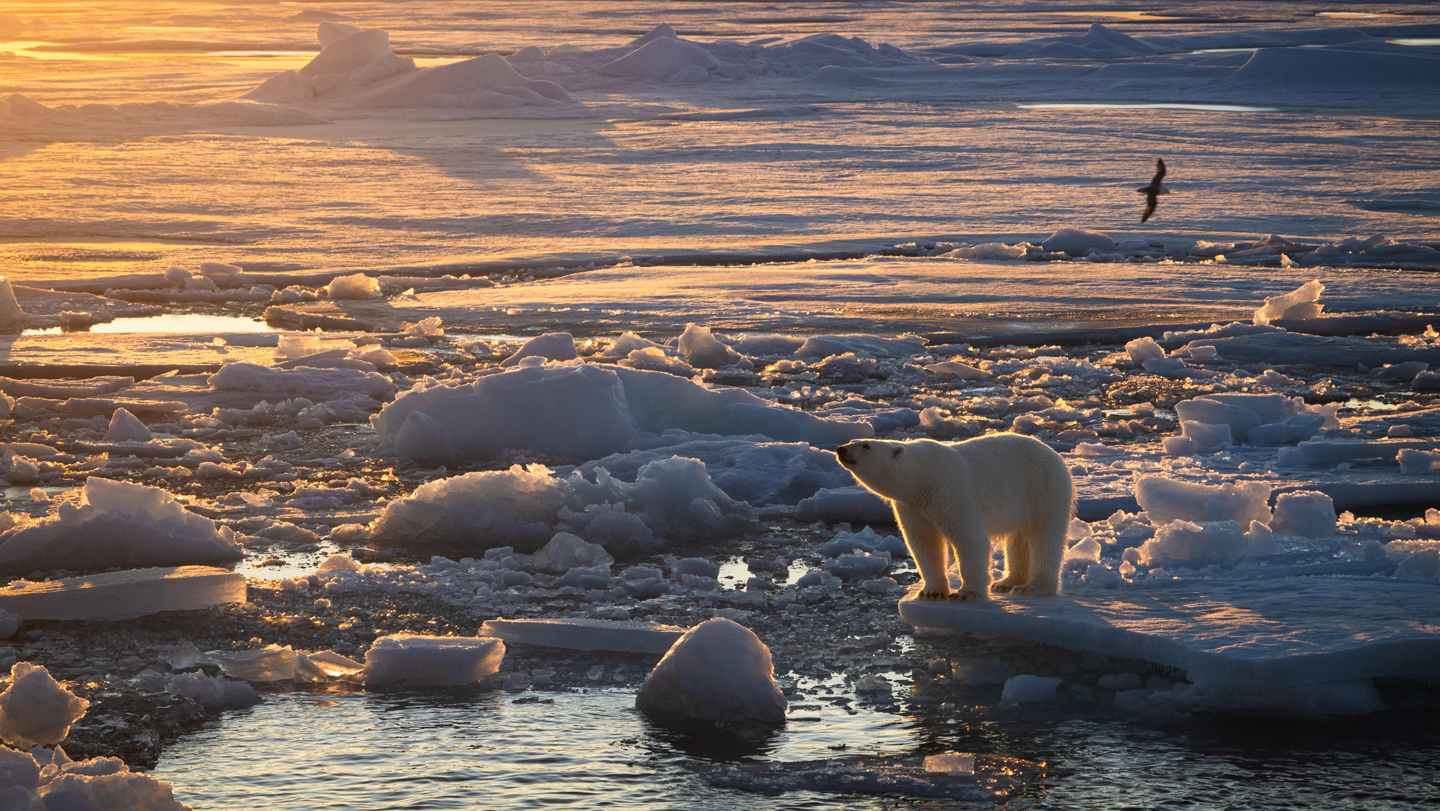
Rising temperatures and rapidly melting sea ice threaten polar bears across the Arctic. But the bears living 800 miles north of the Arctic Circle have stayed surprisingly fat, researchers report January 29 in Scientific Reports.
The Arctic is home to 20 populations of polar bears. Each group faces its own set of struggles — climate change, shifts in prey and human activity, among other factors. But loss of sea ice is one of the biggest threats to all polar bears. The bears use sea ice, which grows during winter and retreats in the summer, to hunt. Typically, when sea ice goes away, polar bears get thinner. If polar bears in a population are losing fat, that can be an early warning that the population will decline. There will be lower rates of reproduction, then younger and older bears will die off.
About 800 miles north of the Arctic Circle is an icy Norwegian island called Svalbard. The island is in the Barents Sea, which has some of the most extreme sea ice loss in the Arctic. Sea ice loss is twice as fast there as in other polar bear habitats. Researchers are interested in polar bears living on Svalbard because the relationship between sea ice and fat loss should be strong. The polar bears there shouldn’t have much fat.
That’s the opposite of what polar bear ecologist Jon Aars and his colleagues found. The team analyzed sea ice levels and body fat of 770 adult polar bears using data from 1995 to 2019. Even though the area lost about 100 days of sea ice cover, the polar bears, on average, gained fat.
“We’ve seen that the polar bears are actually able to do quite fine with the conditions in Svalbard today, although they’re quite different from what they were 20, 30 years ago,” says Aars of the Norwegian Polar Institute in Tromsø. The bears could be eating more land-based prey, such as reindeer, and harbor seals, which are thriving in the new, warmer conditions.
“That doesn’t mean that polar bears are going to do fine in the future,” Aars says. “If sea ice continues to disappear, we think there will be a threshold.”
Source link
About the Author

Amit Nayak
Administrator
Welcome to Untold Theory, where innovation meets insight. We are dedicated to uncovering the hidden dimensions of technology, science, and the digital world. Our mission is to deliver 100% accurate content that keeps you ahead of the curve.we bring you the latest trends, deep dives into emerging technologies, and thought-provoking analyses—all designed to fuel your curiosity. Untold Theory is your go-to source for exploring the untold stories behind the world's most transformative ideas.Join us on this journey of discovery, where every article sheds light on the theories shaping our future.