
PABLO PORCIUNCULA/AFP via Getty Images
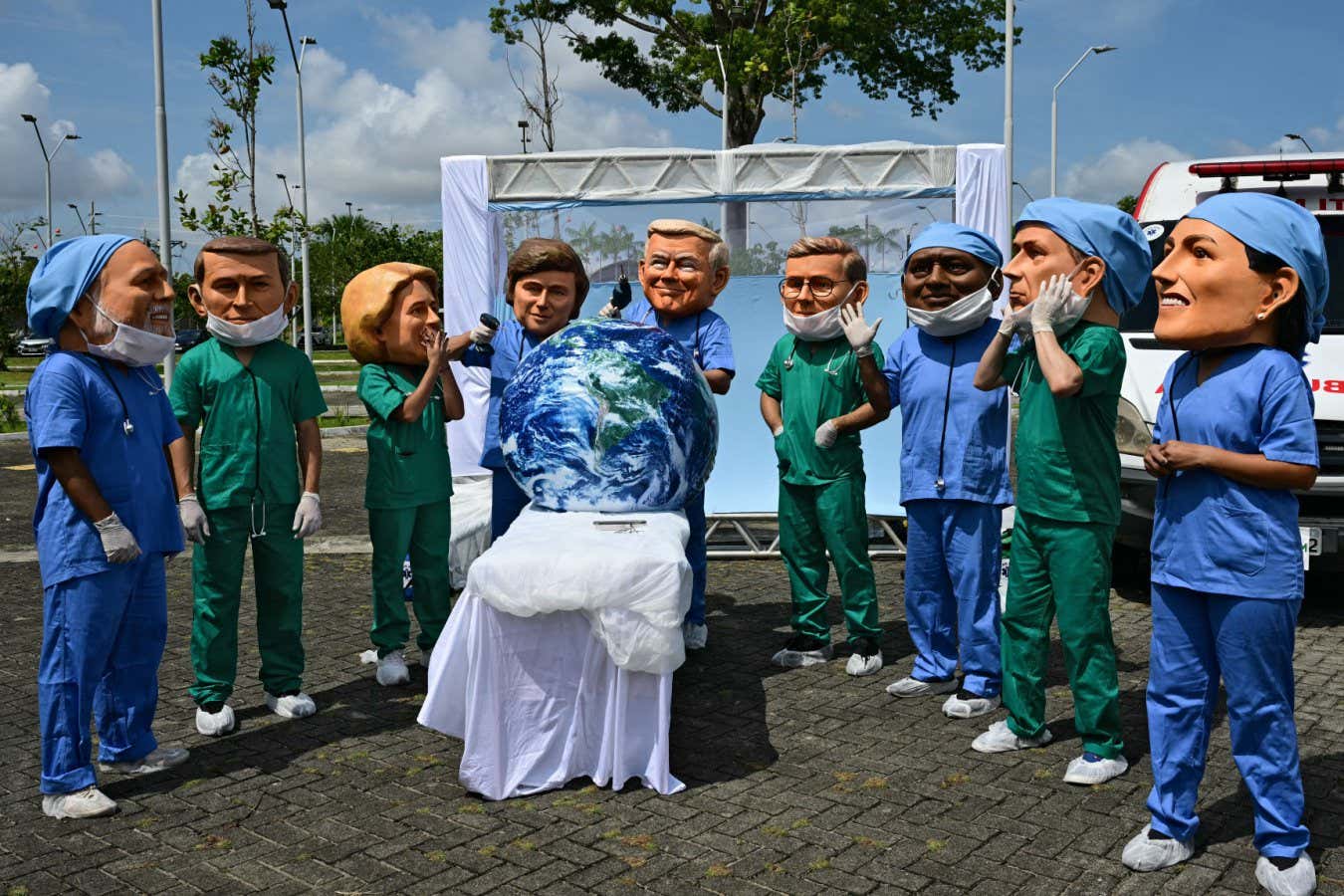
Imagine you have a life-threatening disease. All available scientific tests point to a clear diagnosis, and a deadly prognosis. But when you visit your doctor, they make no direct mention of the disease. After some brief pleasantries, they shake you by the hand and ask you to book another appointment in 12 months’ time.
None of us would consider this to be an acceptable standard of healthcare, and yet this is the approach we are taking towards Earth’s climate. The United Nations’s Conference of the Parties (COP) summits, the 30th of which concluded in Belém, Brazil, late last week, have inarguably delivered important progress in tackling climate change, most notably the 2015 Paris Agreement to limit warming to below 1.5°C. Although that goal has all but failed, we are certainly on course for far less warming than we would be without it.
But it is also clear that the COP process is no longer fit for purpose. As we report on page 6, COP30 ended without even a mention of fossil fuels, the leading cause of climate change, in its final agreement. Despite more than 80 nations calling for a road map to “transition away from fossil fuels” – a phrase that appeared in the COP28 agreement signed in Dubai in 2023 – petrostates, including former COP host Saudia Arabia, worked to block any such agreement. Because COP requires consensus, we are left with nothing but the promise of more talks to be held at COP31 in Turkey next year.
“
Countries in favour of climate action should throw their might behind solar and batteries
“
This state of affairs cannot be allowed to continue, but reforming the COP process will be no easy task. Instead, if the argument for bringing an end to the fossil fuel era cannot be made through science or politics, then we must turn to technology and economics.
Countries in favour of climate action should throw their might behind solar power and batteries, flooding the world with cheap energy that will beat out oil and gas. Nations that want a liveable future could impose economic sanctions on those who appear not to care. Whatever we do, a simple “see you next year” is no longer an acceptable option.
About the Author